Zoroastrianism was the religion of the Iranian peoples before Islam came with the Invasion from Arabia. Some, especially around Yazd, have held to it. Much of it’s tradition was adopted by later religions. It brought on a radical change in attitude that saw Cyrus I write what is seen as the first declaration of human rights, the Cyrus Cylinder, and follow policies of tolerance and respect to many peoples once he’d conquered them. There aren’t records of that happening before in the ancient world.
Chak Chak is the most holy of the mountain shrines. Tradition has it that pilgrims are to stop the moment they see the sight of the temple and continue their journey on foot the rest of the way. Our driver impatiently beeped them out of the way as he drove us up as close as he could possibly get to the shrine, in his beat up car with it’s cracked wind screen and dead dashboard. He smiled and shrugged to the protesting old man along the way, relaying the incident with evident surprise to our guide, who arrived later. Men and women are meant to cover their heads inside the shrine, but foreigners and guides seemed exempt. There was some more shrugging and garrulous grinning aimed at the shrine caretaker, I couldn’t understand the precise details of the exchange, but that was the upshot.
-
- The Iranian Plateau. Most of the major cities are built on this, at elevations of 1500 to 2000m. Beyond the cities is dust.
-
- The eternal flame smouldering
-
- Managed to elbow the pilgrims out of the way
-
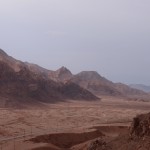
- The view from the pir
-

- This temple has a flame which has continously burnt for 1500 years. There’s probably a secret door that opens if it’s extinguished, but to my dismay it was protected by glass screens.
-

- National express take note, free up the freeness!
-

- Ahura Mazda
-
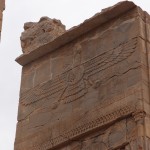
- The Farvahar holy symbol of Zoroastrianism
Fascinating to have been amongst Zoroastrians and arguably in the area where “grown-up” religion began. There’s quite a lot about Zoroaster and his struggle to re-invent religion in a Karen Armstrong book “The Great Transformation” which you may like to read / borrow from me sometime. As I understand it the Aryans had lived a peaceful pastoral life and to go with it had a nice settled religion with a set of divine beings who supervised humanity to make sure people kept their promises etc.. Then the Aryans came across bronze weaponry, and started raiding each other and breaking more than promises, and chaos broke out. Zoroaster needed a religion which would make sense of this new dreadful era, and give people a way to build towards a new time with a new morality and new explanatory myths. (Anyway, book recommended).
Enjoy your time at the ashram. What a trip!
thanks! it was fascinating. i spotted a sign for a zoroastrian institution of some sort on the way here yesterday (to Alappuzha in Kerala), which seems amazing. there is a sizable community somewhere in the north of india, who migrated there around the time of the arabian conquest. they helped fund the fire temple in yazd, which i visited.